


Leasing of industrial space in the Czech Republic exceeded expectations last year - 1.5 million sqm more to be added
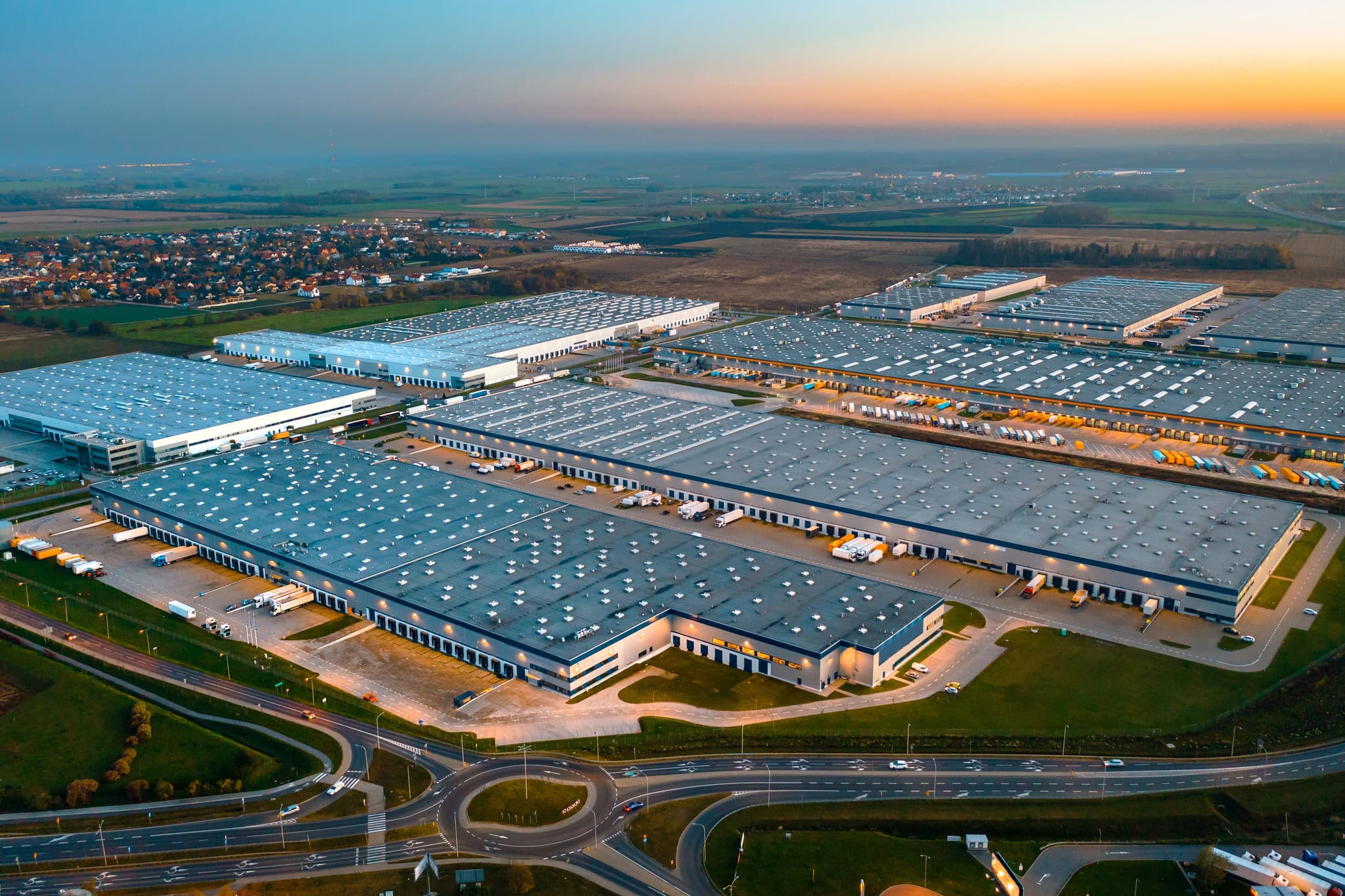
1.3 million sqm of newly leased warehouse and production space. This exceptional result for 2025 best demonstrates the confidence of companies in the Czech market. The newly realized demand goes across all segments - industrial and engineering companies, logistics sector, retail including e-commerce are interested. The competitiveness of the domestic industrial real estate market is expressed by the total sum of concluded lease contracts, including extensions and renegotiations - almost 2.2 million sqm of industrial space.
According to the data of real estate consultancy 108 REAL ESTATE, tenant activity accelerated in the last months of 2025 and is developing very well in the first weeks of this year. Developers with experience from previous economic cycles, despite the excellent results, are launching new projects with great caution and almost exclusively on the basis of securing future tenants or owners. Last year, 771,000 sqm of new logistics and manufacturing space was completed. Deferred demand will be reflected in a significant increase this year - 1.4 million m² of industrial space is expected to be commissioned.
"Despite the record numbers, we are not talking about euphoria, but rather cautious optimism. This year must confirm the trend. We can see significant regional differences, for example, in the South Moravian Region, rents are falling, and the area around Pilsen is also stagnating, where vacancy is increasing. Tenants and end owners are much more demanding - just a good address and the usual standard is not enough. They want performance, stability and predictable energy costs, ESG or certifications. Technology is becoming as important as accessibility,"
says Jakub Holec, CEO of 108 REAL ESTATE.
Specifically, companies are increasingly demanding quality cooling, higher standards of metering and power management, increasing demands for server capacity or advanced security features and monitoring. This is linked to continued robotization, automation and the impact of AI on manufacturing and logistics as well.
In terms of rent levels, regional differences reach up to EUR 2/m²/month. Traditionally, the ring of modern industrial parks around Prague had the highest average rents in 2025, at EUR 7.13/m2/month. In addition to Central Bohemia, the most expensive regions include Liberec and Hradec Králové. At the other end of the spectrum were modern industrial halls in the Olomouc region, where the average rent reached EUR 5.15/m2/month. Low values were also recorded in the Moravian-Silesian Region (EUR 5.33/m²/month) and the Zlín Region (EUR 5.38/m²/month). The average rent stabilised at EUR 6/m²/month in Q4, with the highest rent reached at the end of the year at EUR 7.85/m2/month.
The unprecedented tenant activity that accompanied the last months of last year has not yet been reflected in rents. Almost 80 leases for areas over 1,000 sqm were concluded. The largest transactions included a pre-lease of nearly 52,000 sqm by an undisclosed company at Panattoni Business Park Joseph in Most, a lease extension by an undisclosed logistics operator for approximately 46,000 sqm at P3 Park on the D1 motorway and the renegotiation of more than 35,000 sqm for an undisclosed manufacturing company at CTPark Brno. Other notable new transactions include Reckitt's production at GARBE Park in Chomutov (35,000 sqm), a confidential automotive supplier at Panattoni Business Park Cheb (just under 28,000 sqm), an undisclosed manufacturing company at Panattoni Park Stříbro (18,000 sqm) and iPrice at VGP Park Vyškov with approximately 17,500 sqm.
According to Matej Indra, Head of Industrial Agency at 108 REAL ESTATE, speculative construction without a pre-secured tenant is on the decline. As a result, the volume of shell and core phase construction is also decreasing.
"It is certainly not appropriate to assess the performance of the industrial real estate segment only by vacancy or the volume of canned gross buildings. On the contrary, it is the available space that plays a role in many tenders of multinational companies and can be completed very quickly. It is healthy for the market to retain a certain percentage of such halls."
However, this is not the case for the warehouse and manufacturing space that will be completed this year. The vast majority are already occupied or in the final stages of negotiations with specific tenants. These are highly superior industrial buildings in terms of area: only six industrial halls account for around a third of the new supply of 1.4 million sqm that the market will grow by this year! The building in Panattoni Park Cheb will be the largest in terms of usable floor area.
The analysis of 108 REAL ESTATE proves that tenant demand is balanced and diversified. It reaches practically all areas, and the size of transactions is also scaled - from the basically strategic ones to a set of smaller leases up to 3,000 sqm. It is this category that is already practically unavailable in the Prague area.
In 2025, the trend of commercial companies leasing space directly and only then selecting logistics operators has intensified. Previously, it was more common that warehouse space was demanded as part of comprehensive distribution services. The reason for this is the continuous optimisation of costs.
"We expect the demand for space from e-commerce companies to grow within the internal market. This is due to the new customs duty of EUR 3 for each item in a consignment up to the value of EUR 150 from outside the European Union, which is due to come into force in July this year,"
adds Matěj Indra.
Indicative enquiries from the end of 2025 and the beginning of this year suggest that the Czech Republic is in the crosshairs of several large global companies considering expansion or relocation due to its economic and relative political stability, as well as the security situation. After all, the performance of the automotive sector, which is still perceived as key to the entire industrial sector in the Czech Republic, is not declining. Toyota and the Škoda Auto group, whose brands have become the third best-selling in Europe, remain its main drivers. Toyota has also announced significant investment in the expansion and modernisation of production capacity at its Kolín plant. In line with 108 REAL ESTATE's previous predictions, interest in Tesla's electric cars is waning, with aggressive pricing policies being replaced mainly by Chinese brands led by BYD.